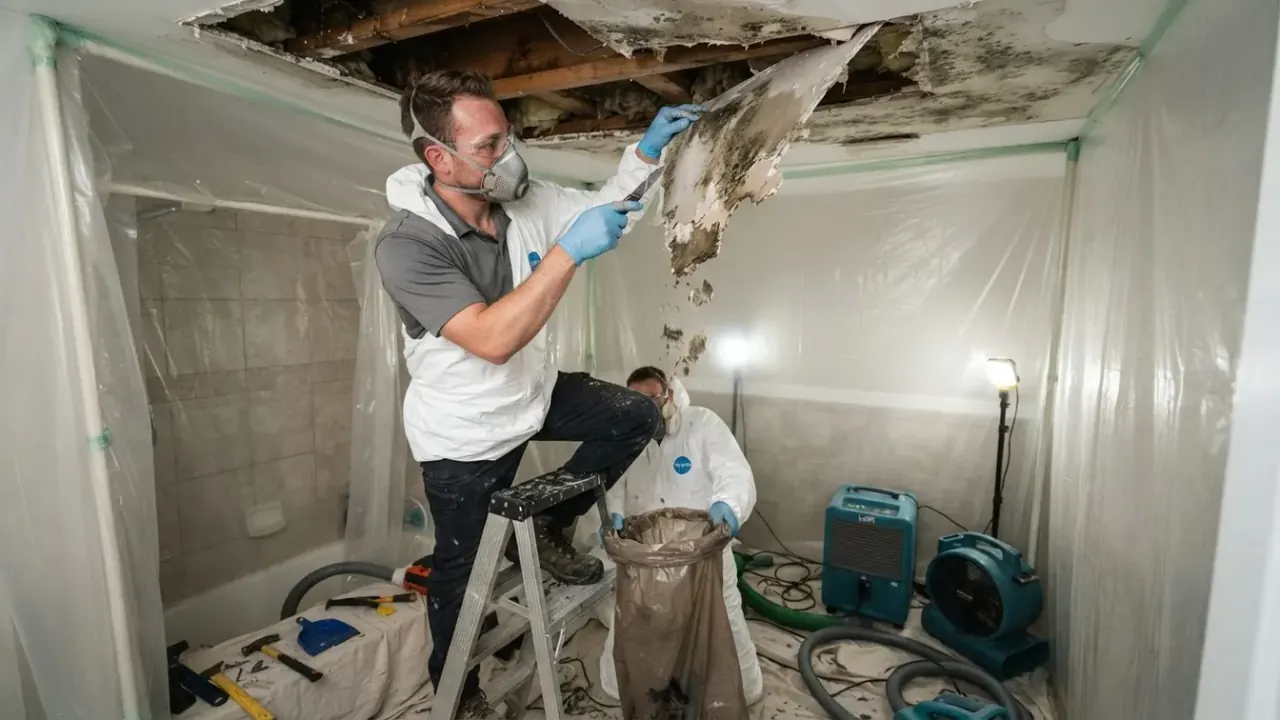
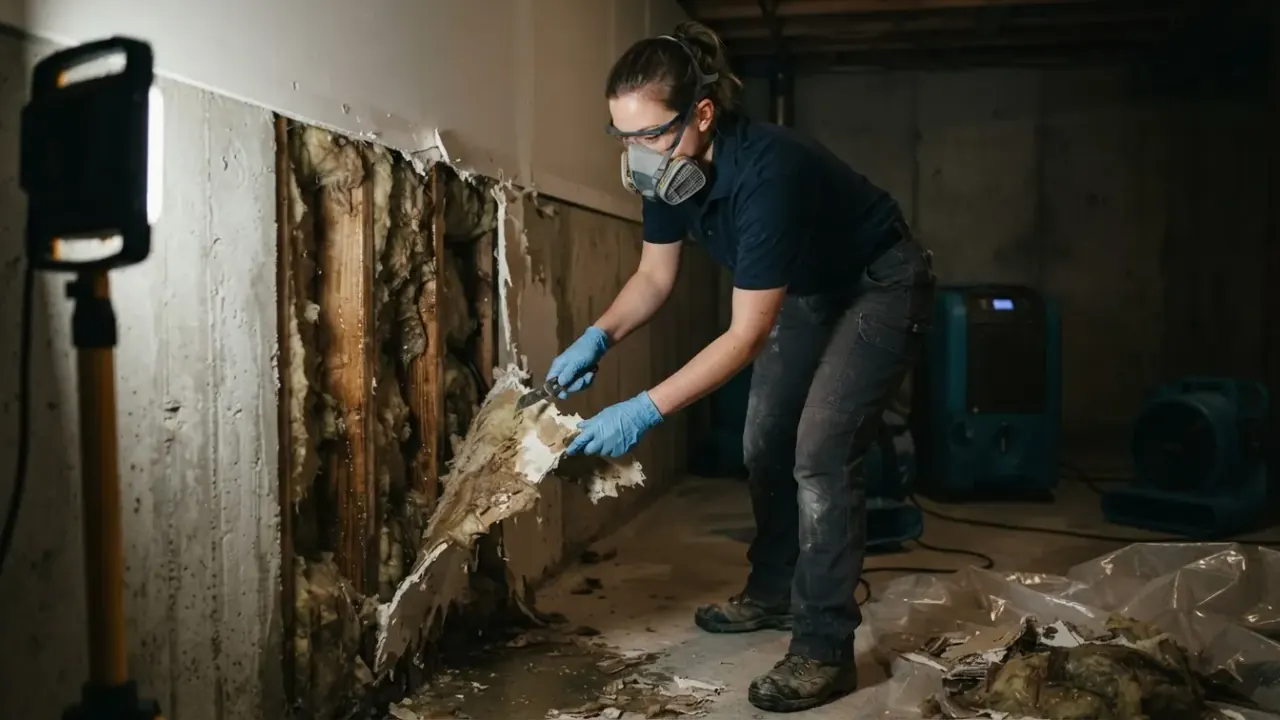
Flagstaff winters freeze pipes — in crawlspaces, garages and unheated walls. When one bursts, cleanup starts with stopping the water and mapping how far it ran.
First-hour stepsCrawlspace and garage pipesCleanup and drying
Thorough inspectionsWe check walls, floors and cavities for hidden moisture.
Detailed reportsYou receive a clear summary of what was found and done.
Protective measuresWe take steps to safeguard the rest of your property.
Follow-up checksWe re-check moisture readings before the work is closed out.
What does burst pipe cleanup include?
Cleanup covers the water and the damage it left — not the plumbing repair itself, which is your plumber's work.
Source confirmation
We confirm the break is isolated and the water is off. If the pipe is still live, nothing else matters yet.
Water removal
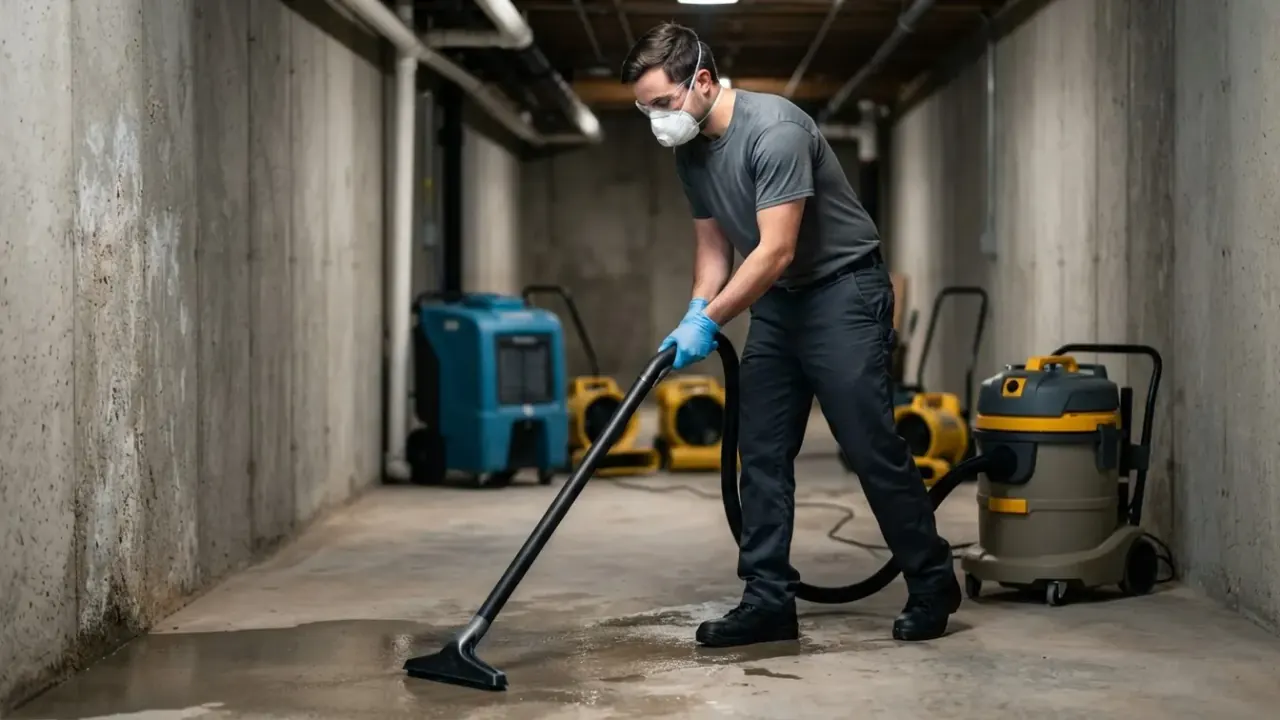
Standing water is extracted from floors, crawlspaces and lower levels. A burst can release a lot of water before anyone notices.
Moisture mapping
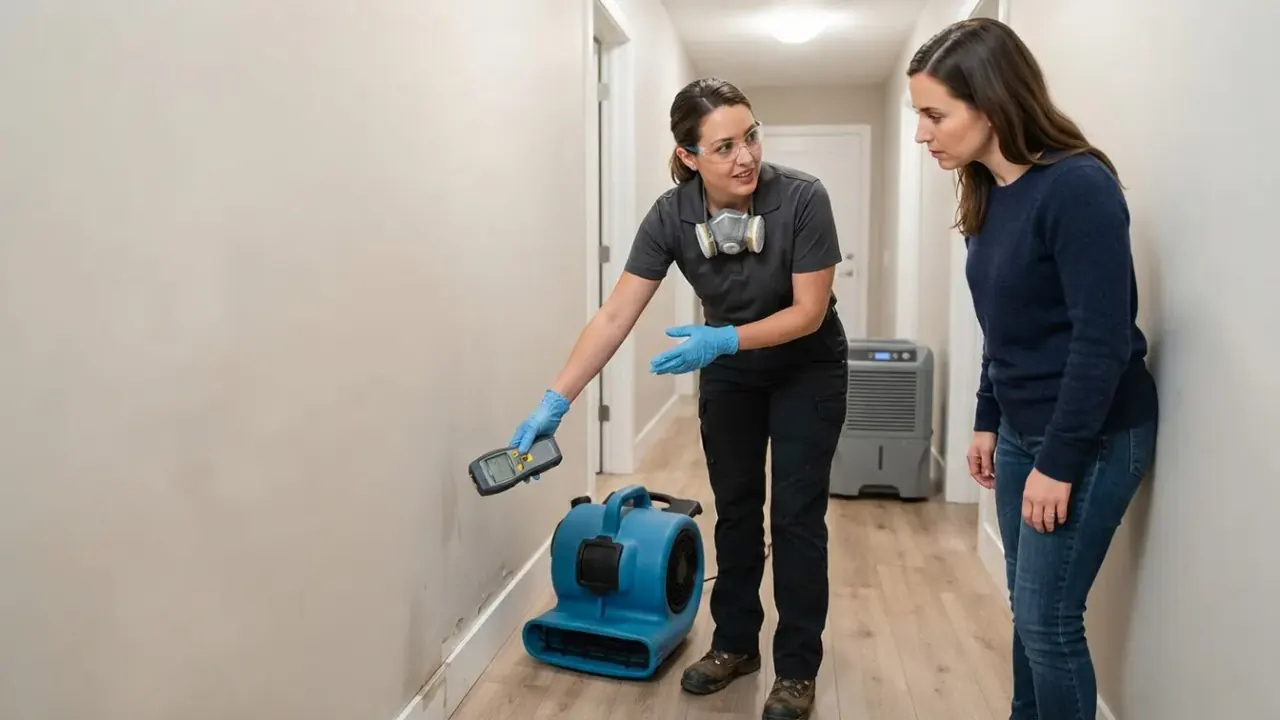
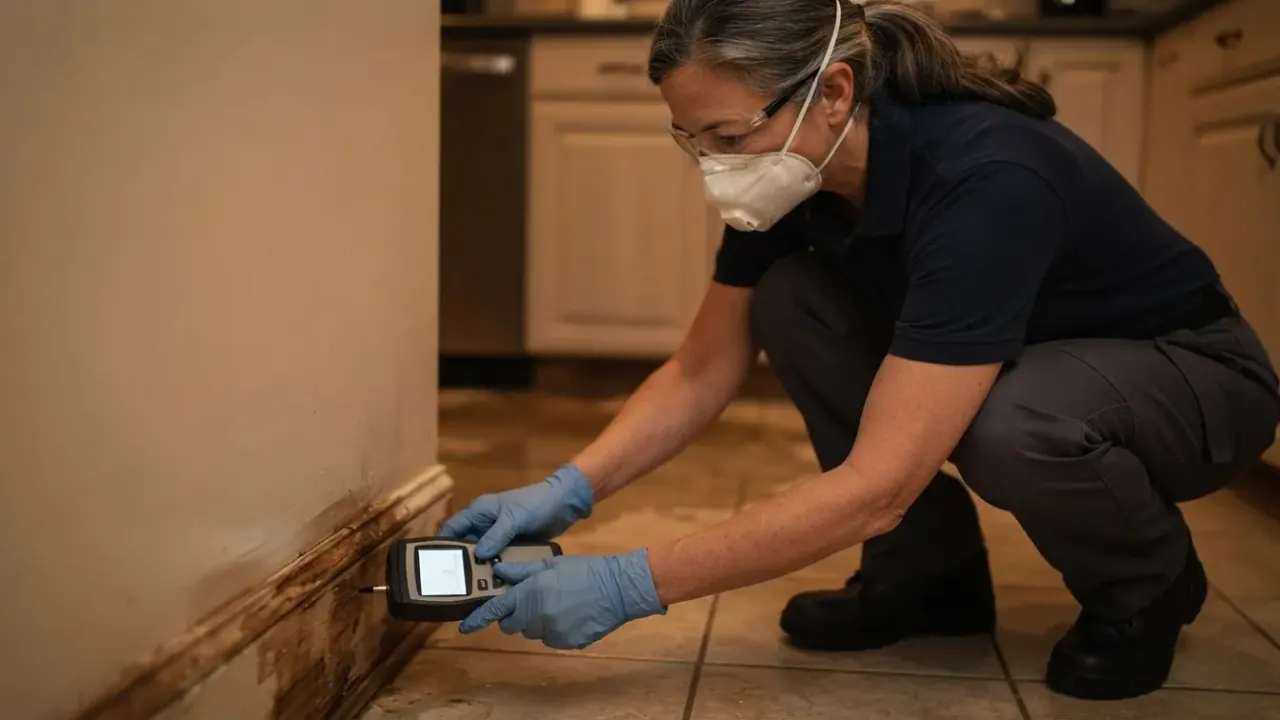
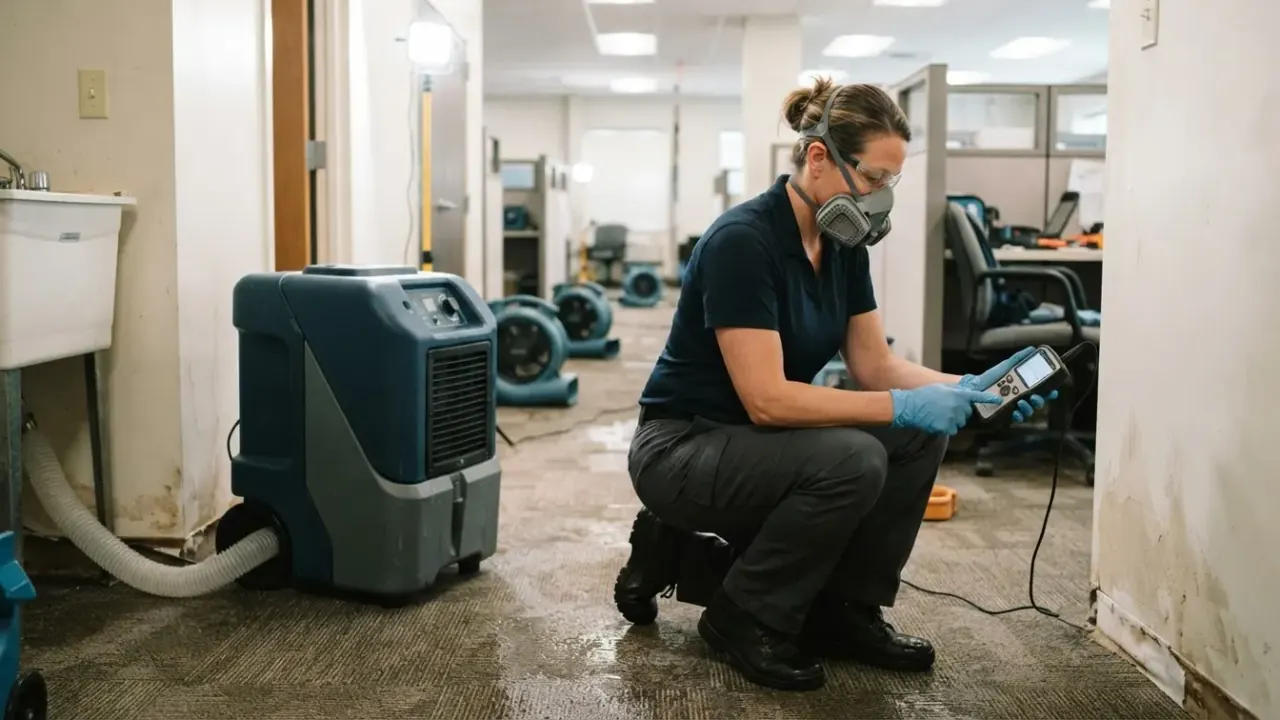
Meters show where the water ran — under floors, inside walls, into insulation. Burst water travels further than the visible flood suggests.
Drying and cleanup
Wet materials are dried or, where ruined, noted for removal. The readings log supports your repair scope and any insurance claim.
Homes, rentals and businesses.
Freeze risk follows the building, not the owner — but empty buildings are where bursts do the worst damage.
For Homeowners
Know your main shut-off before winter. If a pipe bursts, shut the water off first, then call — we will handle extraction, mapping and drying.
Crawlspace and garage supply lines
Kitchen and bathroom pipes on outside walls
Outdoor taps and irrigation lines
For Second-Home Owners and Landlords
Flagstaff has many homes that sit empty in winter (about 15% of housing is vacant). A burst in an empty home can run for days — cleanup starts with a full moisture map, not just the room where it is found.
Vacation homes in Kachina Village and Mountainaire
Rentals between tenants near NAU
Property-manager documentation and photos
Why do pipes burst in Flagstaff?
The freeze register: what Flagstaff's winters actually do to plumbing.
Flagstaff averages around 90 inches of snow a year, and the all-time record low is −30°F. Freezes can arrive from late September and linger into early June — one of the longest freeze windows of any Arizona city.
Water expands as it freezes inside a pipe. The pressure splits the pipe or pushes a joint apart, and the flood often starts at thaw, when water flows again. Pipes in crawlspaces, garages and unheated additions freeze first.
The burst is a plumbing problem. The flood it leaves is a drying problem — and the drying is where most of the cost is won or lost.
What freezes first
Pipes in crawlspaces, garages, exterior walls and unheated rooms.
When it happens
Freeze risk runs roughly late September to early June in Flagstaff; hard freezes cluster in mid-winter.
What to do first
Shut off the main water valve, then call for extraction and a moisture check.
What happens during burst pipe cleanup?
From shut-off to verified dry — the order matters, and each step is documented.
Shut off and make safe
The main valve stops the flow. Power to wet areas is checked, and standing water near electrics is treated with care.
Main shut-off
Electrical safety
Photos first
Extract the water
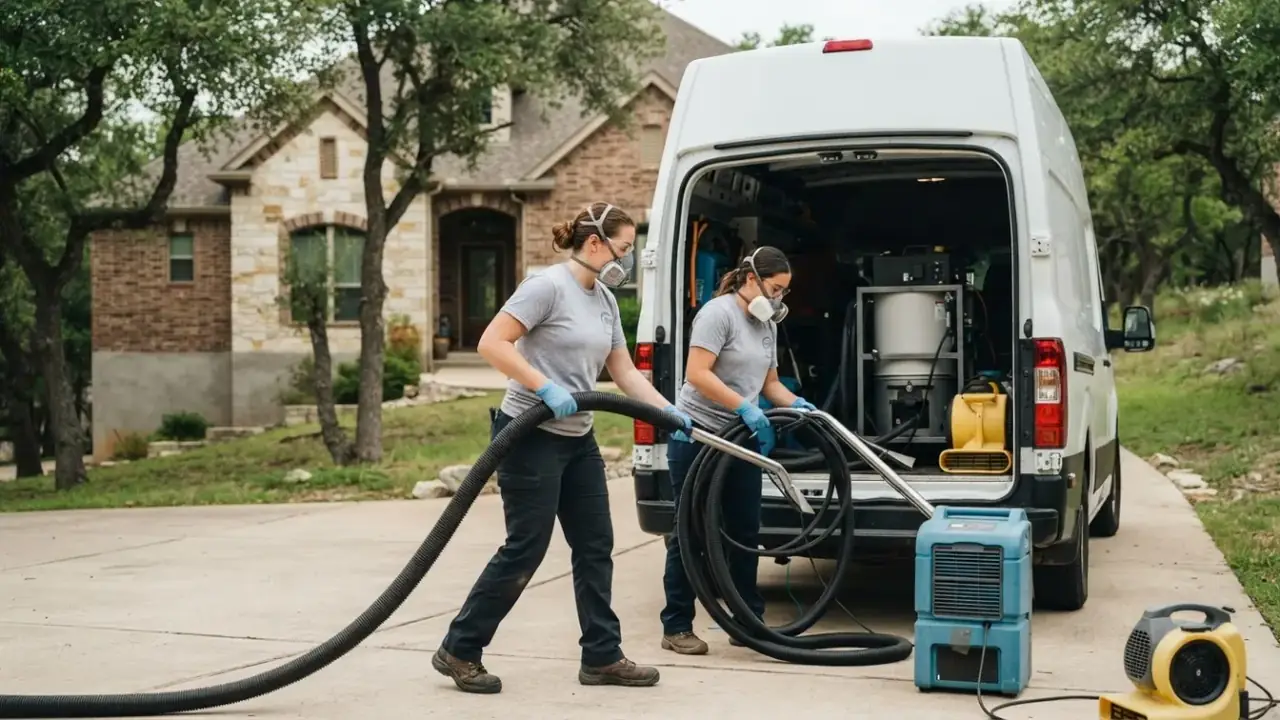
Pumps and extractors remove standing water from rooms, crawlspaces and lower levels.
Pumps
Extractors
Crawlspace access
Map where it ran
Meters trace moisture under floors and inside walls. Burst water often reaches rooms that never looked wet.
Moisture meters
Wall checks
Floor checks
Dry the structure
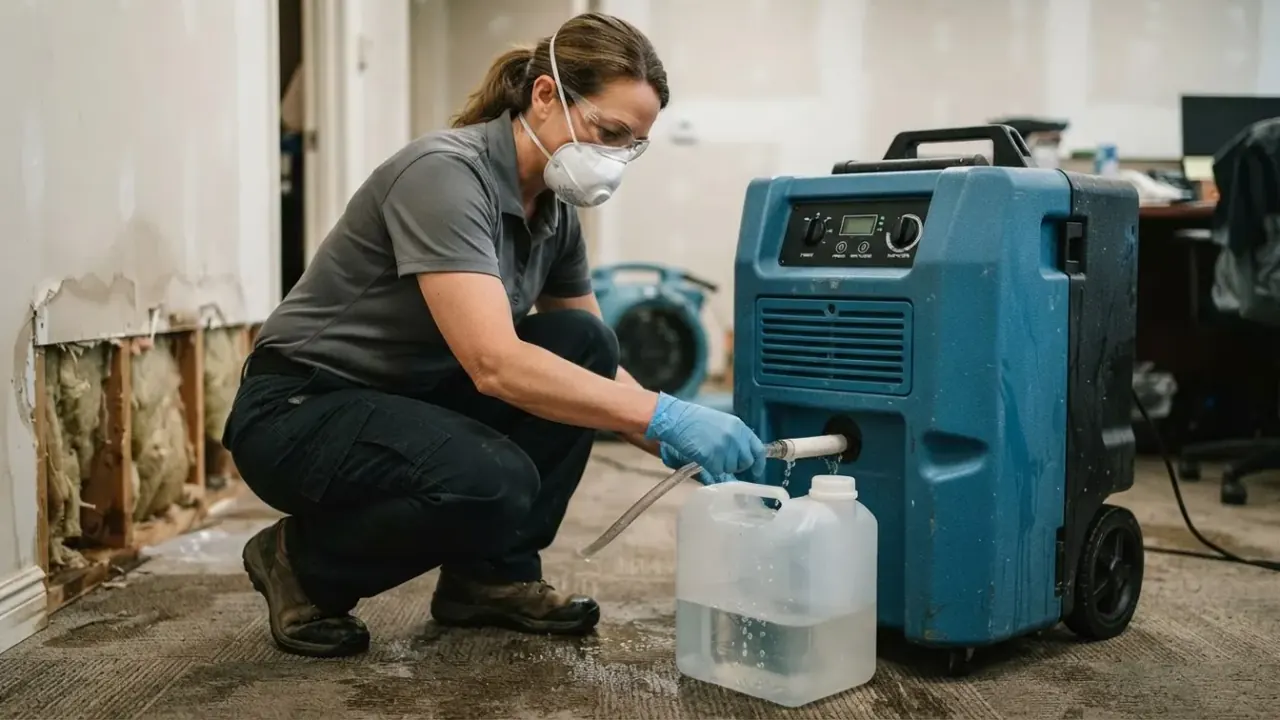
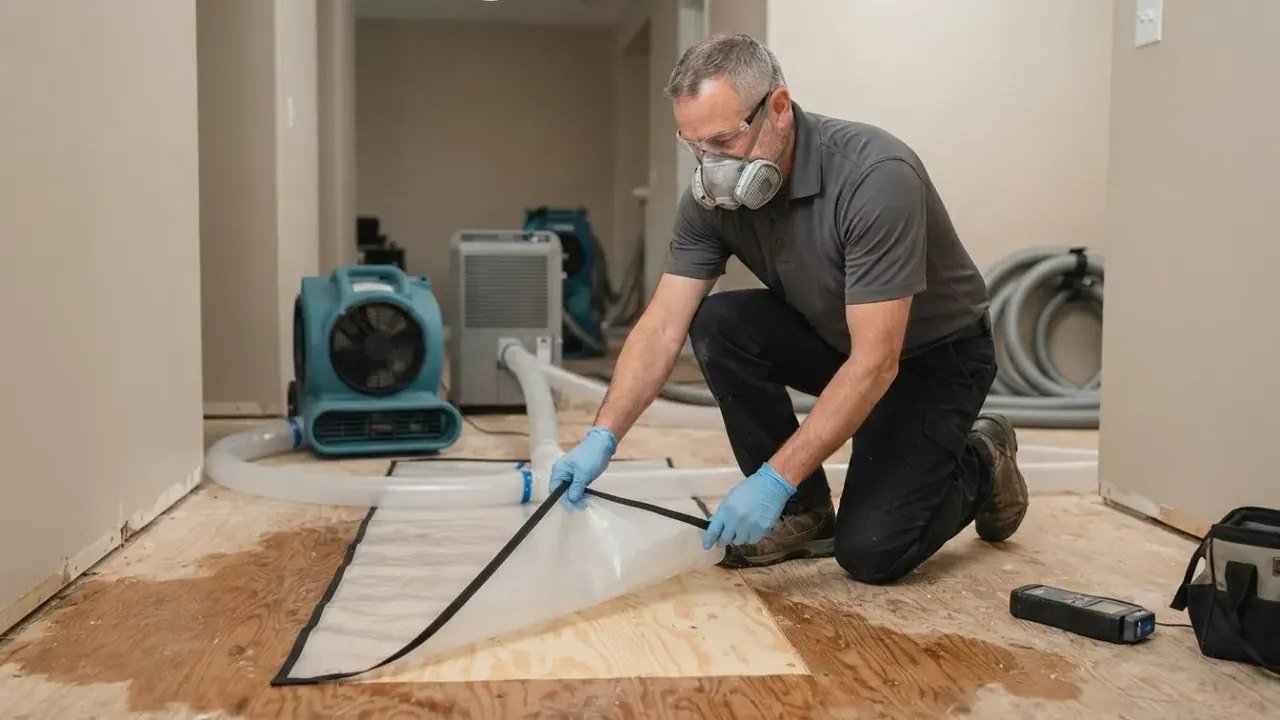
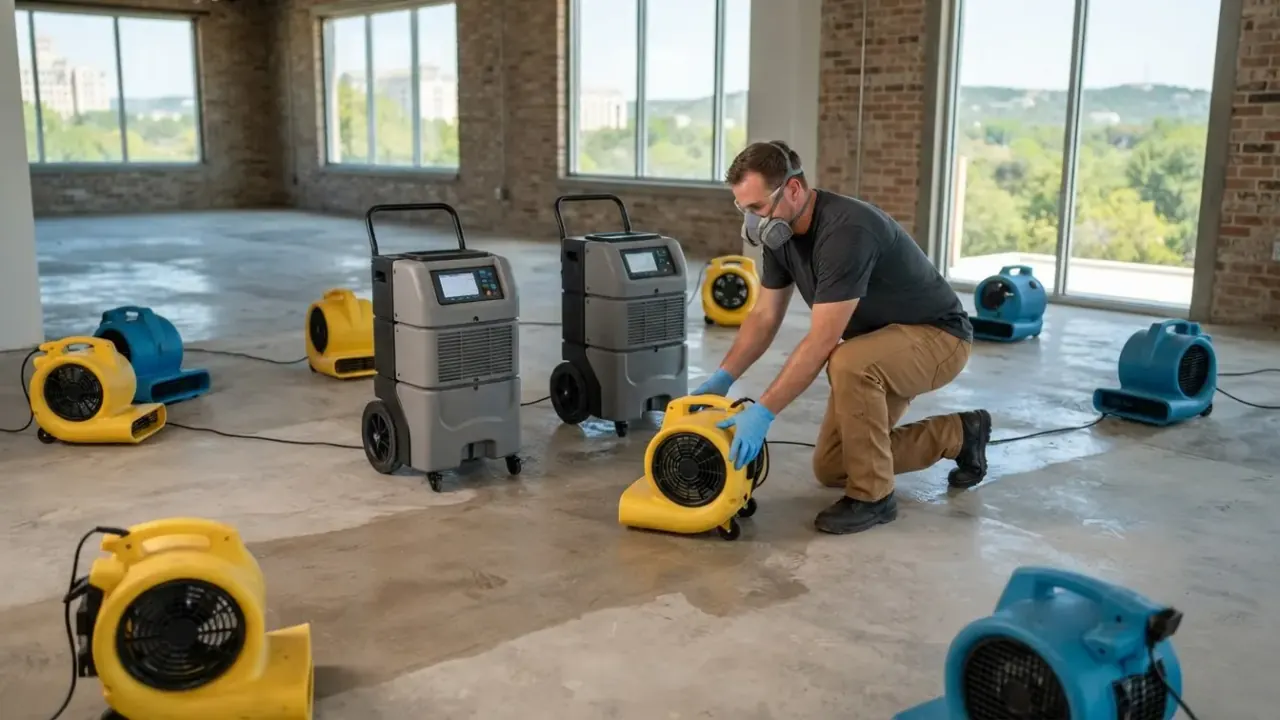
Air movers and dehumidifiers dry materials in place where possible. Ruined materials are listed for removal and repair.
Air movers
Dehumidifiers
Reading log
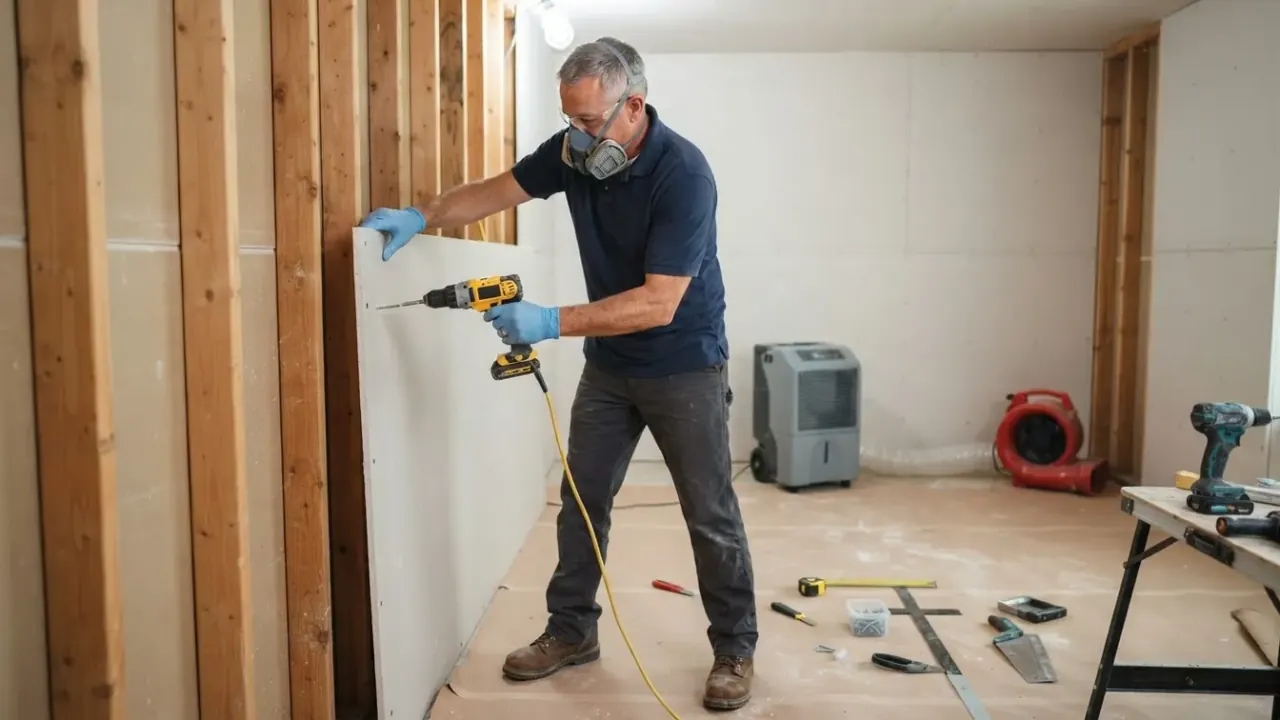
Hand off to repairs
With dry readings confirmed, your plumber's repair and our rebuild work can proceed. See the repair page for what follows.
Dry sign-off
Repair scope
Claim records
What equipment does burst cleanup use?
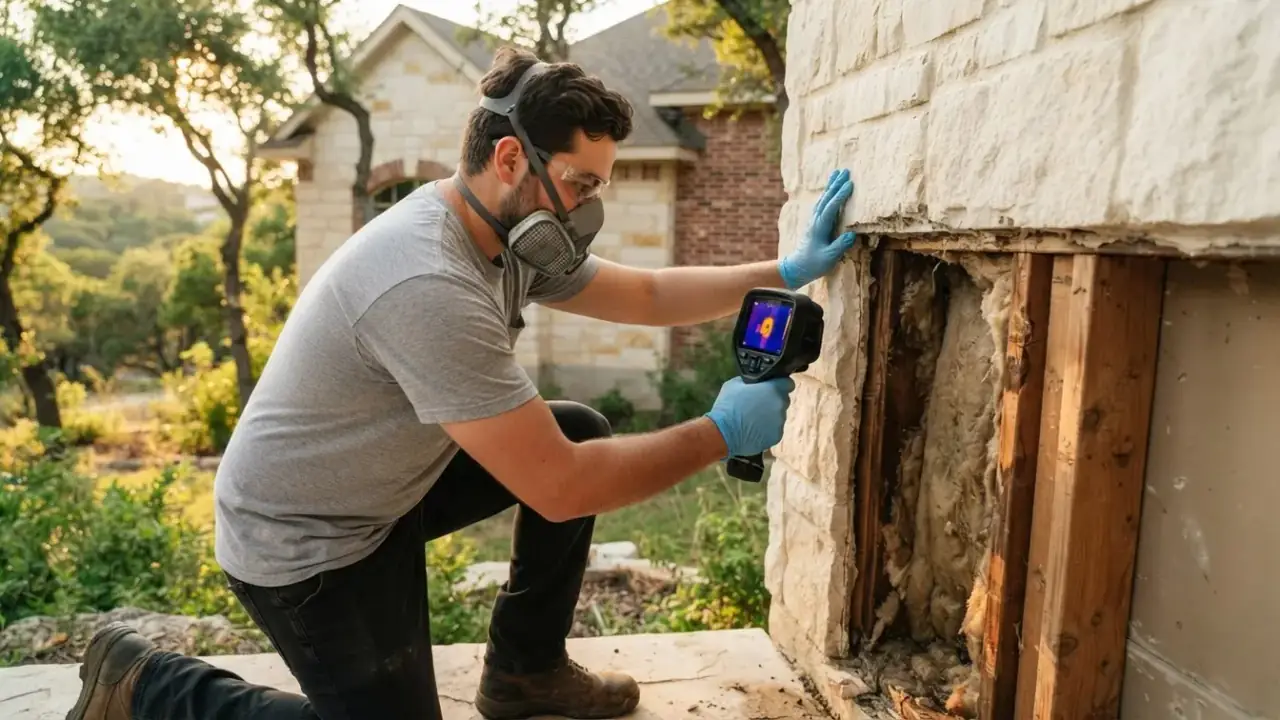
Move across a circle, or focus it and press Enter, for an illustrative thermal view of the photograph.
Moisture meters
They trace burst water through walls and floors. A burst's real footprint is usually bigger than the puddle.
Pumps and extractors
For the volume a burst releases — especially in crawlspaces and lower levels where water collects.
Air movers and dehumidifiers
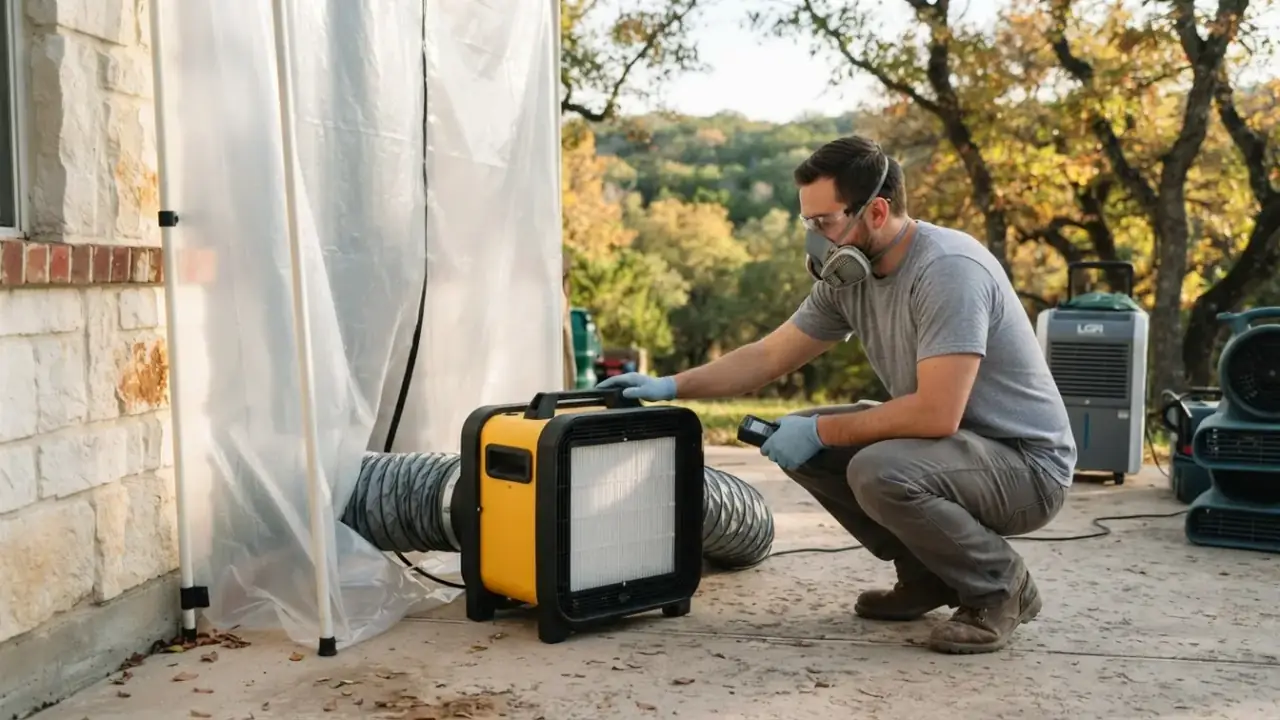
Drying equipment sized to the rooms and materials affected, monitored with readings.
Thermal imaging camera
Cool, damp paths behind walls show up as temperature differences. Meter readings confirm what the camera suggests.
Thermal views are illustrative, generated from the photographs.
Methods
First-hour protocol
Shut off water, protect electrics, photograph everything, then extract. The first hour decides how much dries vs. how much is replaced.
Cavity checking
Baseboards and lower drywall are meter-checked around the burst. Cavities that read wet are dried directly.
Vacant-home protocol
For homes found flooded late, the whole structure is mapped — water may have run for days and reached every low point.
Kachina VillageMountainaireFort Valley
Freeze season in Flagstaff: where bursts happen
Burst pipes here follow the cold. Crawlspaces under older homes, garages that are not heated, and additions built over unheated space are the repeat locations. Snow possible from October to May — and freezes recorded even later — means 'winterising' is a long-season habit, not a December task.
Kachina Village: Many second homes sit empty and unheated in winter — the classic late-found burst.
Mountainaire: Wooded, higher lots with crawlspaces; pipes freeze where cold air pools under floors.
Fort Valley: Among the coldest pockets around Flagstaff; exterior-wall pipes need insulation and monitoring.
Crawlspaces and garages: The two most common freeze locations across Flagstaff homes.
Thaw floods: Many bursts are only discovered at thaw, when split pipes start flowing again.
Drying runs until readings confirm the structure is dry.
Small leak or burst? The signs differ
IllustrativeThe thermal view is generated from the photograph. It is not a measurement. Drag the handle, or use the arrow keys once it is focused.
A slow leak
What you see: A stain, a musty smell, or a water bill that crept up.
What it means: A small, long-running leak — damage is local but may have grown mold.
Meter checks size the problem before any wall is opened.
A frozen pipe, not yet burst
What you see: No water from a tap, frost on a pipe, or a bulging section.
What it means: The pipe is at risk. Thawing it wrong can split it.
Shut the water off and let it thaw slowly — never with a flame — then check for splits.
A burst pipe
What you see: Running water, a flooded room, or water through a ceiling.
What it means: The pipe has split; damage grows until the main is off.
Extraction and moisture mapping start as soon as the flow stops.
What problems does a burst leave behind?
The split pipe is one repair. The water it released creates the rest of the list.
Water in wall cavitiesIt runs down inside wallsBurst water follows framing and pipes into cavities and lower floors. Without mapping, wet insulation stays hidden.
Saturated floorsWood, laminate and subfloor soak throughFloors under a burst take the full volume. Early extraction decides whether they dry or get replaced.
Second freezesA wet, cold home can freeze againIn a Flagstaff winter, a flooded unheated home can freeze a second pipe. Drying and draining lines protects against a repeat.
Why cleanup is more than mopping up
A burst releases water under pressure. It goes places a spill never reaches.
The real footprint, found
Meters trace water into cavities and under floors. Cleanup covers the actual damage, not just the visible part.
Drying that prevents mold
Cavities dried early do not grow mold. Our mold guidance explains the timeline and prevention.
Records for your claim
Photos, readings and a written scope document a sudden burst — the kind of loss home insurance is built for. See our insurance guide.
Repairs scoped once
A verified dry structure means the repair scope is written once, correctly — drywall, flooring and paint, no re-dos.
What a written scope covers.
What a written burst-cleanup scope covers and what shapes it. For how restoration costs are built, see our water damage cost guide.
Based in Flagstaff at 2051 E Huntington Dr, covering neighborhoods across the city. These are areas we serve — call to confirm your street.
Sunnyside
Mount Elden Estates
Downtown
Southside
Doney Park
Kachina Village
Mountainaire
Fort Valley
Frequently Asked Questions
Shut off the main water valve — that single step stops the damage growing. Turn off power to wet areas if water is near outlets and it is safe. Move what you can out of the water, take photos, then call (928) 766-1764 for extraction and a moisture check.
Insulate pipes in crawlspaces, garages and exterior walls, and disconnect outdoor hoses before freeze season. Keep some heat on in vacant homes, or drain the lines fully. During hard freezes, opening cabinet doors under sinks on outside walls lets warm air reach the pipes.
No — pipe repair is plumbing work for your plumber. Our cleanup covers the water: extraction, moisture mapping, drying and the records. Sequencing matters: the pipe repair and the drying plan are usually arranged together so the home is not re-wet.
Tell us what happened and where the water is. Calling is fastest when water is standing — reach us at (928) 766-1764, or send the form and we will take it from there.