
For Homeowners
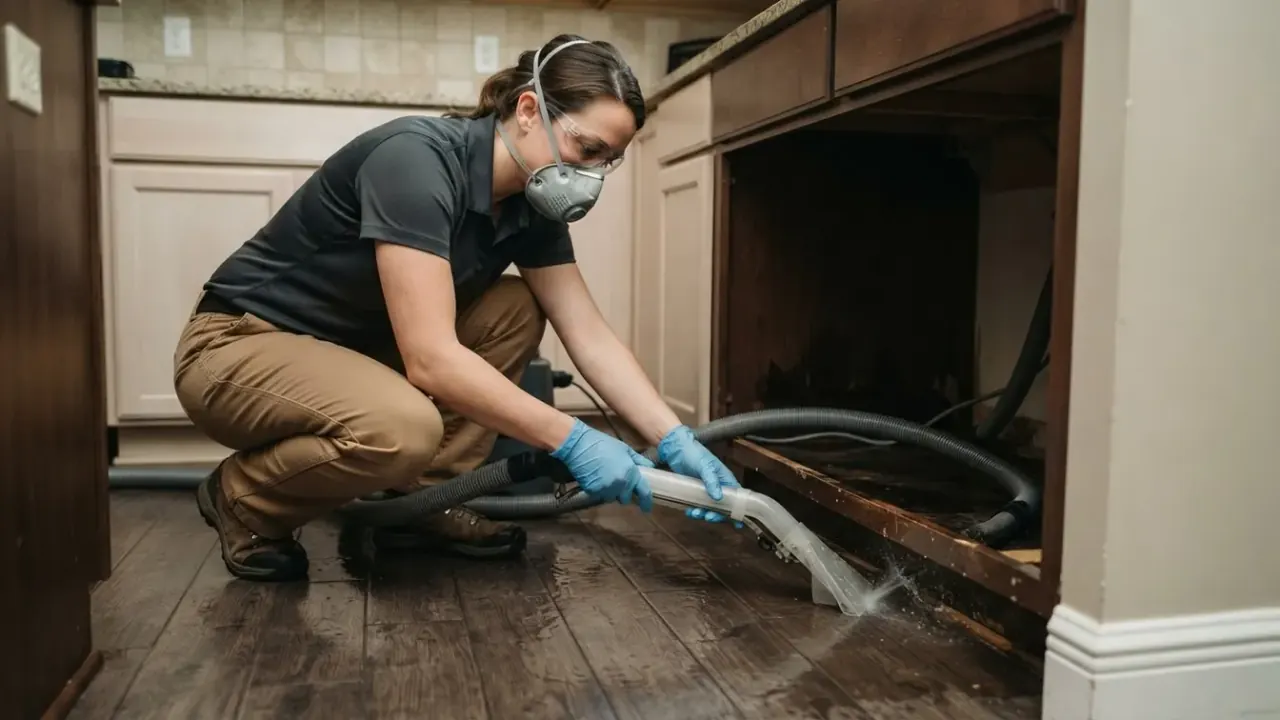
We explain which materials are wet, which can dry in place, and which cannot. You get readings at each check, in plain language.
- Hardwood and engineered floors
- Wall cavities and insulation
- Crawlspaces and basements
Getting the water out is only half the job. Drying removes the moisture left inside walls, floors and framing — and proves it with meter readings.
 Moisture detectionAir mover placementDehumidification
Drying is a measured process, not a fan left in a corner. Each visit checks readings and adjusts the setup.
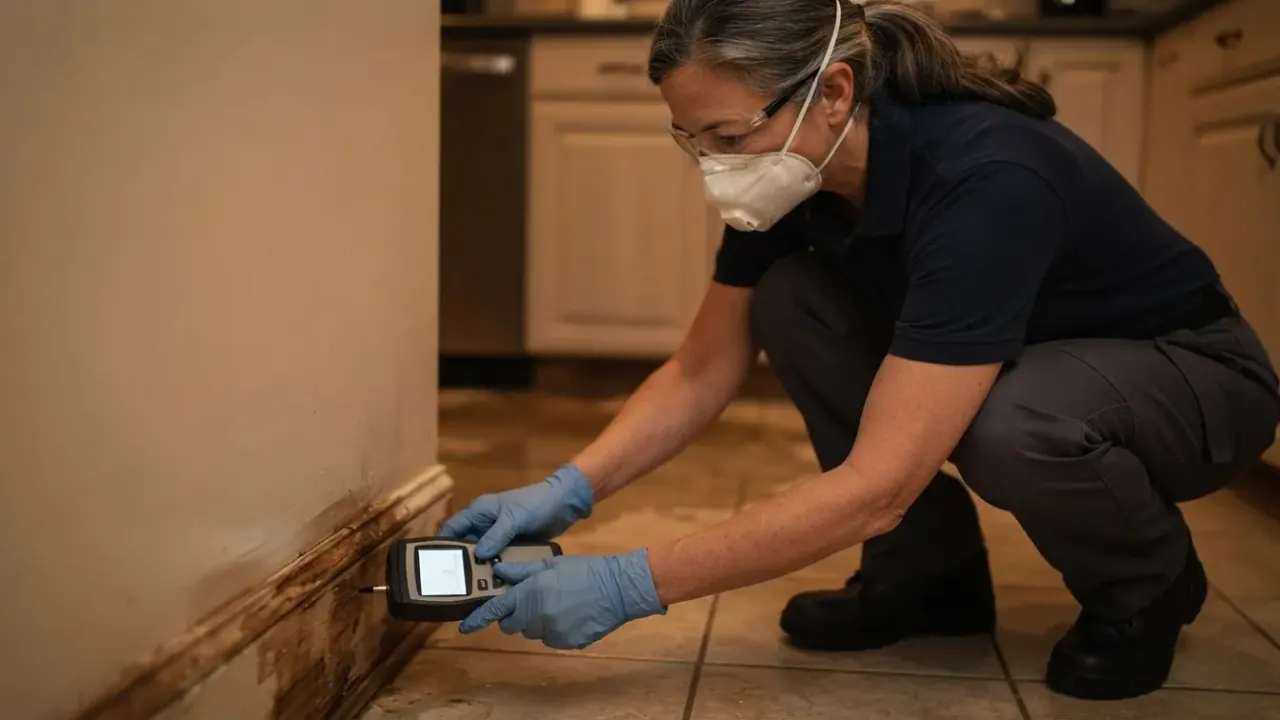
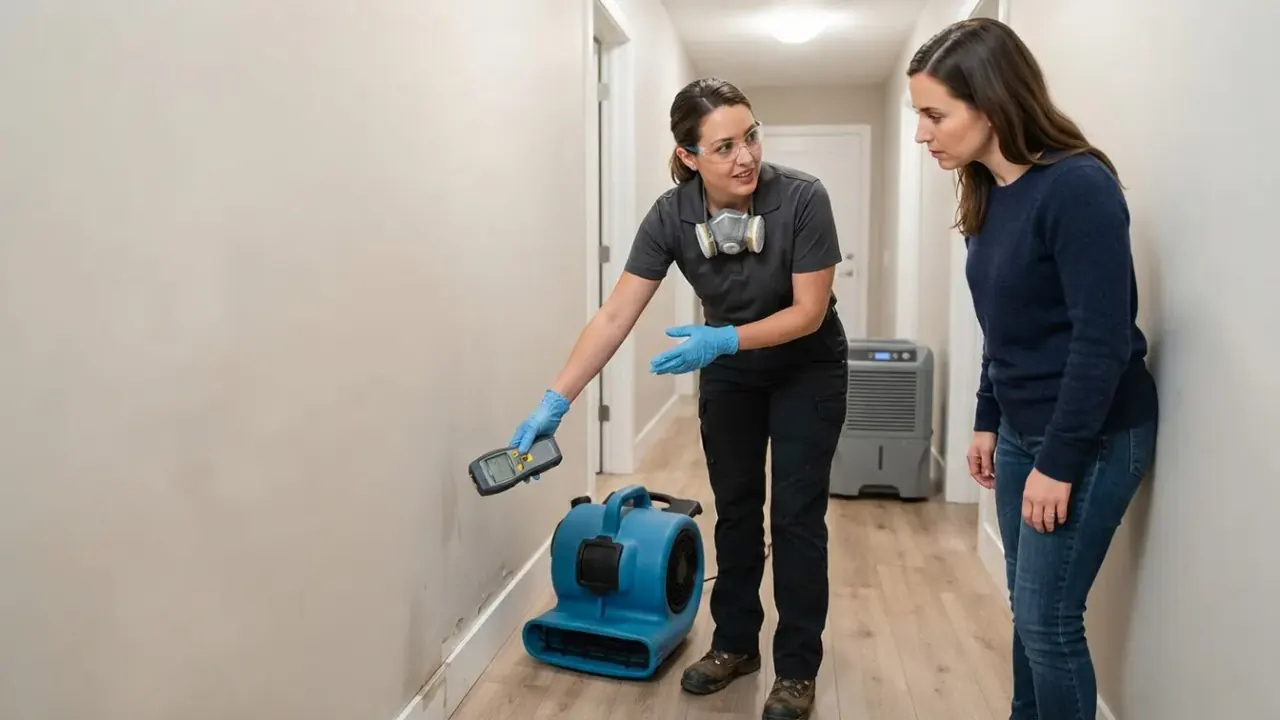
Pin and pinless meters map moisture in drywall, wood, subfloor and framing. The map decides where equipment goes.
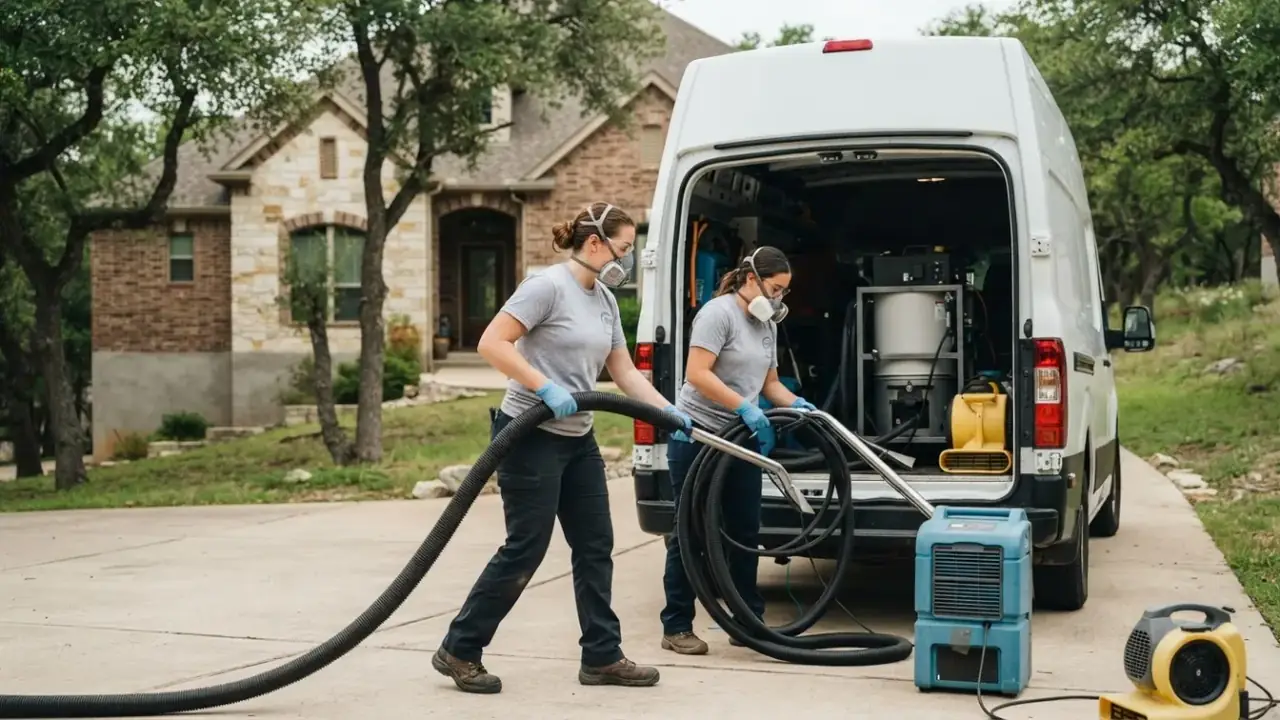
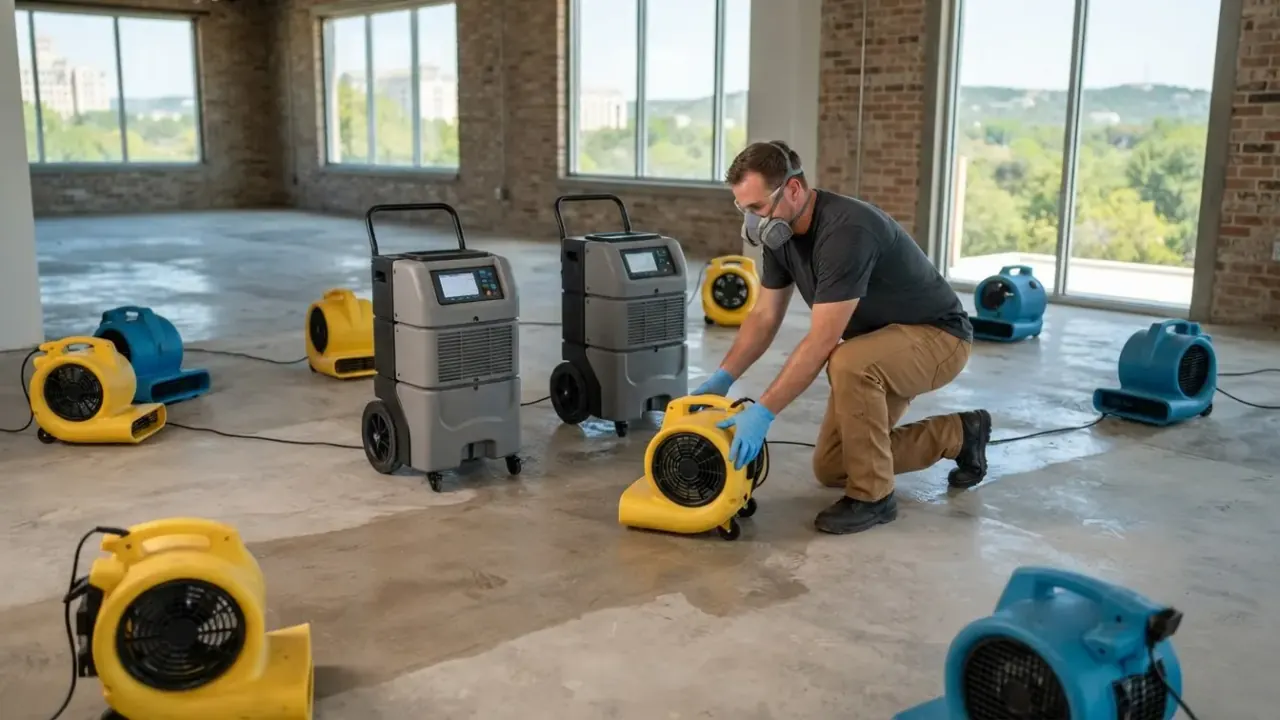
Air movers are aimed across wet surfaces to lift moisture into the air. Placement matters more than raw fan count.
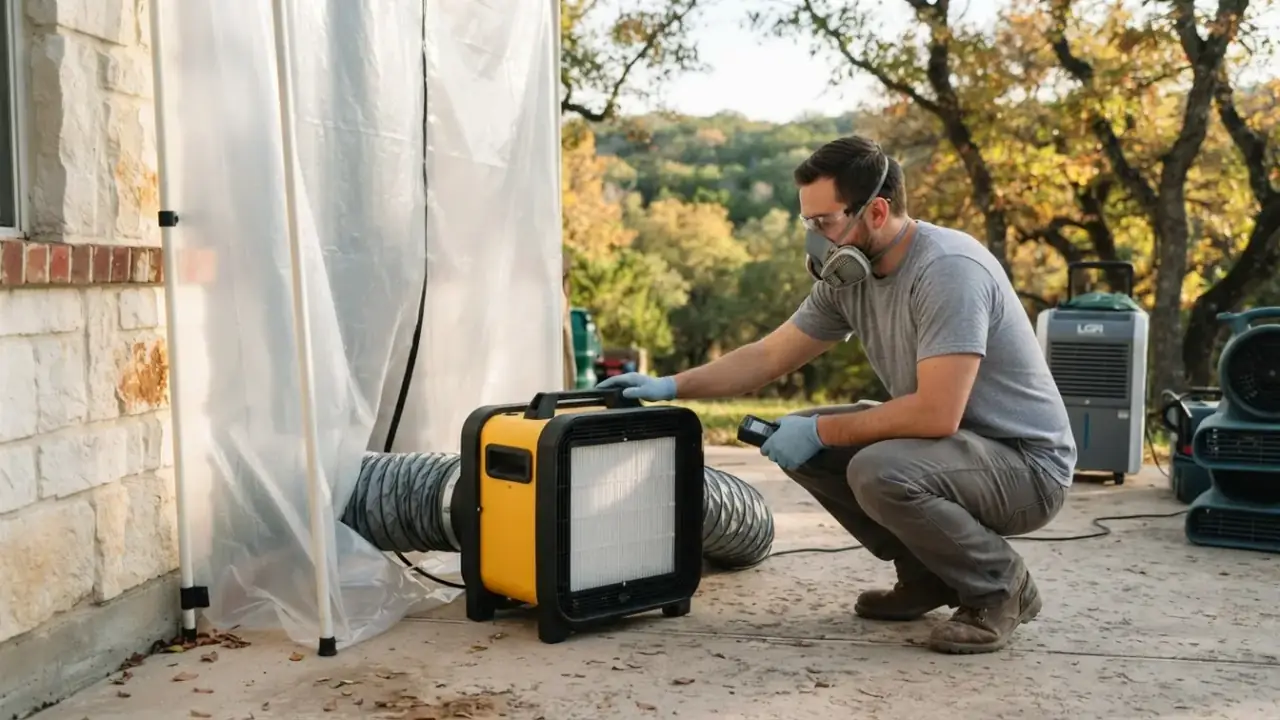
Dehumidifiers pull that moisture out of the air so it cannot settle back. At Flagstaff's altitude and winter cold, this step does the heavy lifting.
Readings are re-checked and logged. Equipment is moved, added or removed based on numbers — and drying ends when readings say dry, not when a calendar does.
The science is the same; access, noise and scheduling are planned around who uses the space.
We explain which materials are wet, which can dry in place, and which cannot. You get readings at each check, in plain language.
Drying is documented for owners and insurers. Equipment placement plans around tenants, customers and trading hours where possible.
Why a home can look dry on the surface and still be wet inside — and how drying fixes that.
See how it worksStructural drying removes moisture that has soaked into building materials after the standing water is gone. Drywall, insulation, subfloor and framing can hold water long after surfaces feel dry to the touch.
Drying works by controlling three things: air movement across wet surfaces, humidity in the room air, and temperature. In Flagstaff's cold months, indoor air holds less moisture and cold materials dry slowly — so dehumidification and, where needed, gentle heat matter more here than in a warm desert city.
Dry is a reading, not a feeling. If it is not measured, it is a guess — and hidden moisture is what grows mold later.
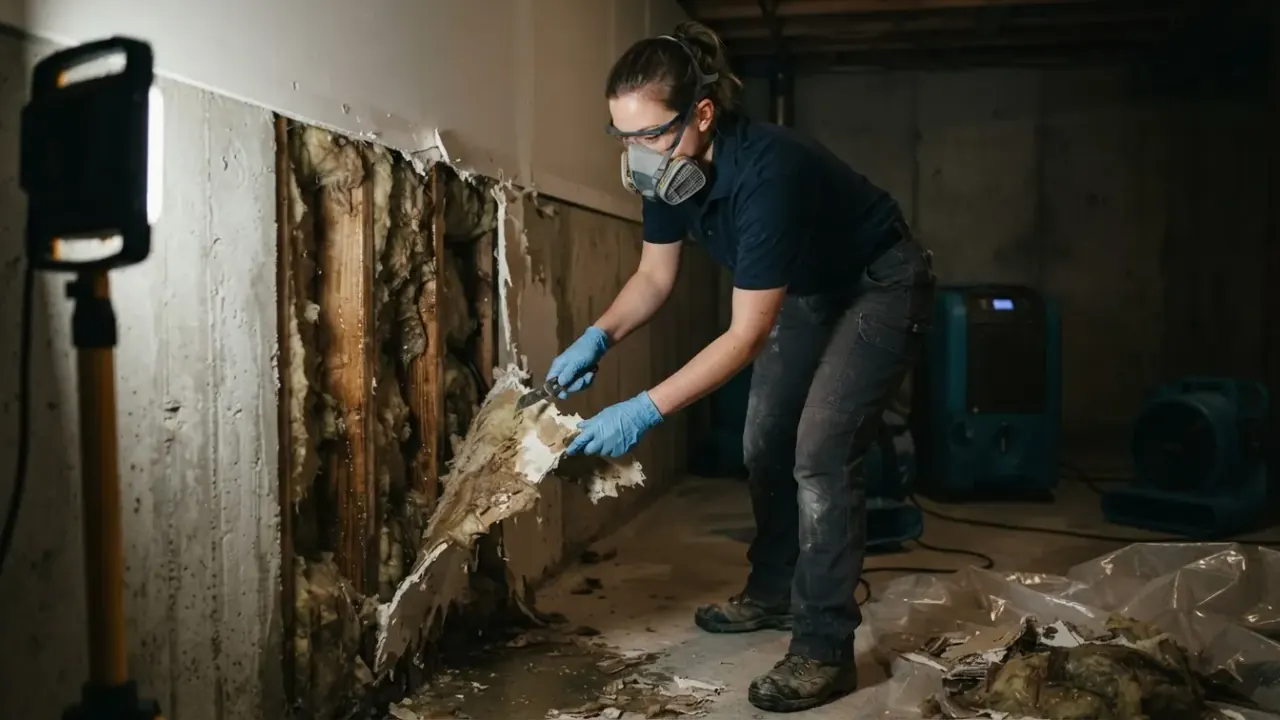
Drying follows the readings. These are the steps from wet structure to verified dry.
Meters find moisture in each material and mark how far it spread. Photos and readings start the drying log.
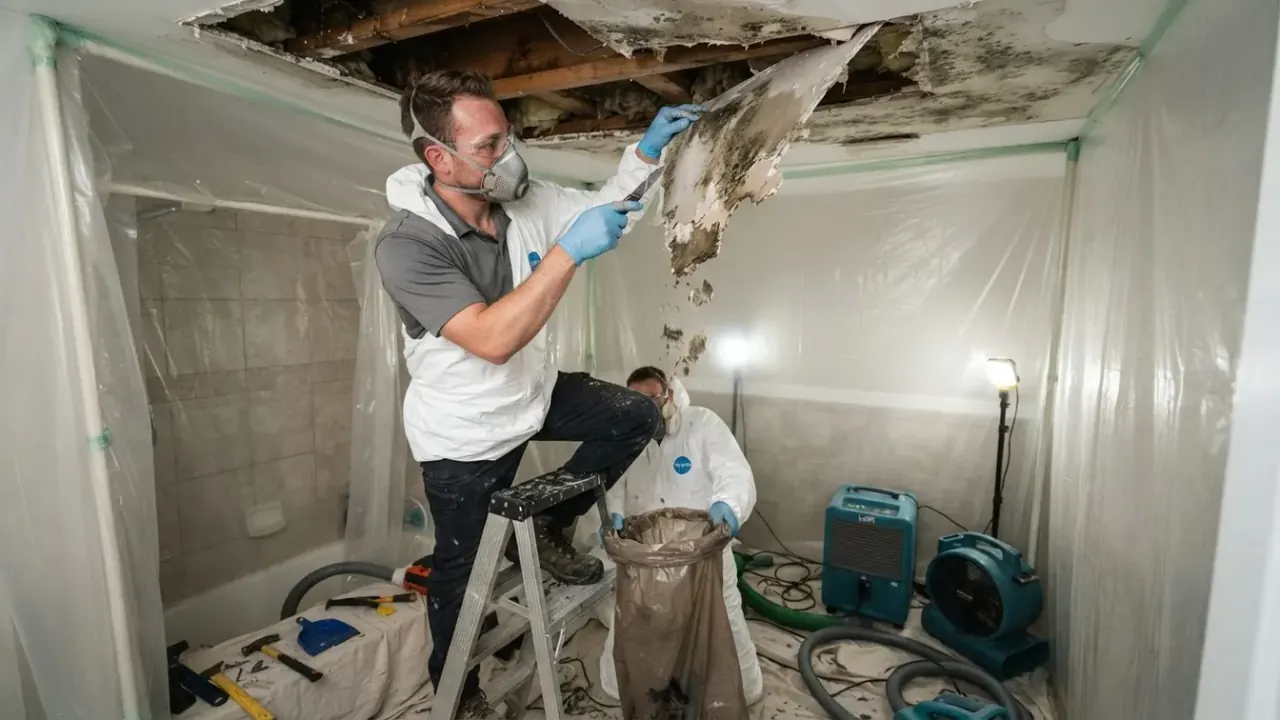
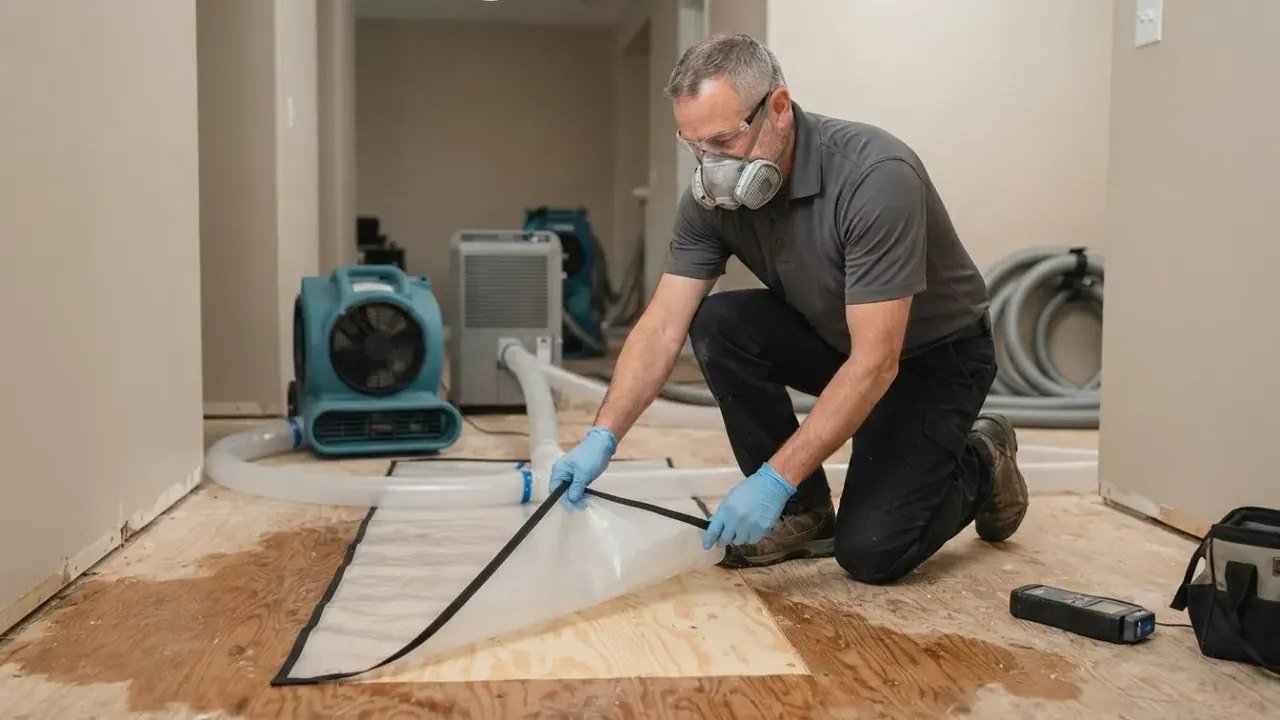
Air movers and dehumidifiers are placed for the specific materials and room layout. Containment is used where dust or mold is a concern.
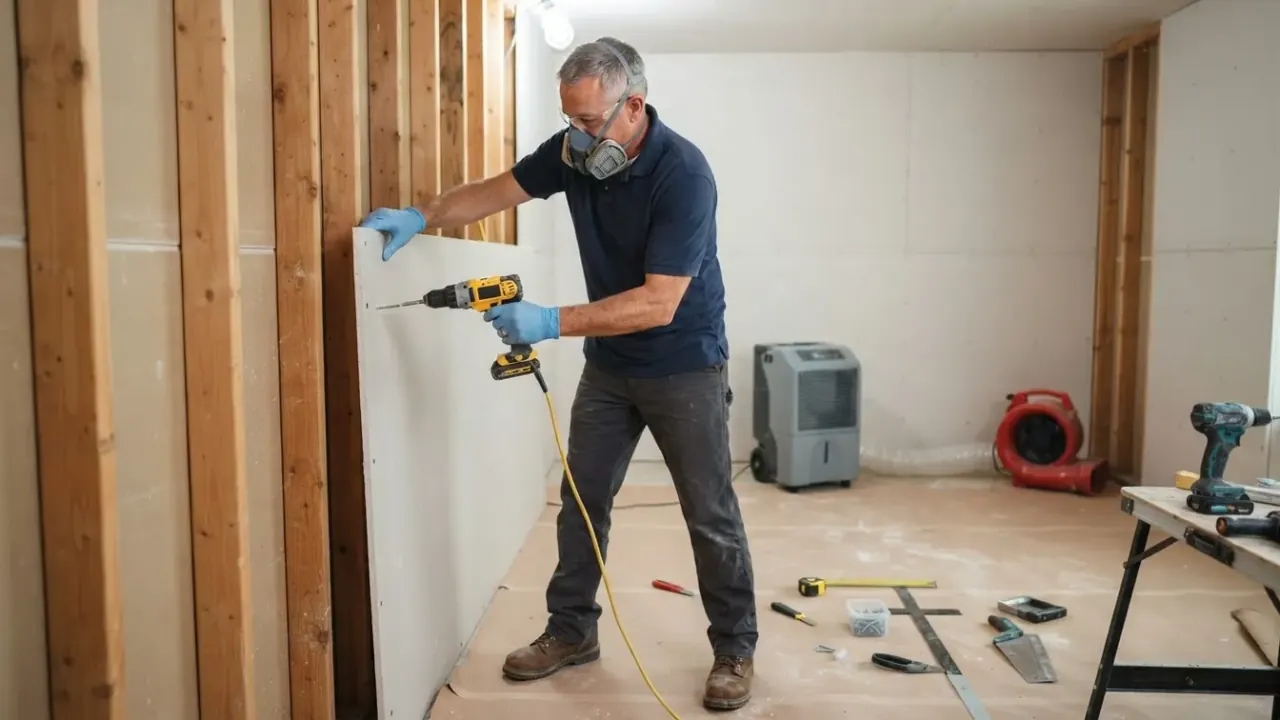
Equipment runs while readings are re-checked on monitoring visits. Wet areas that stall get adjusted airflow or targeted drying.
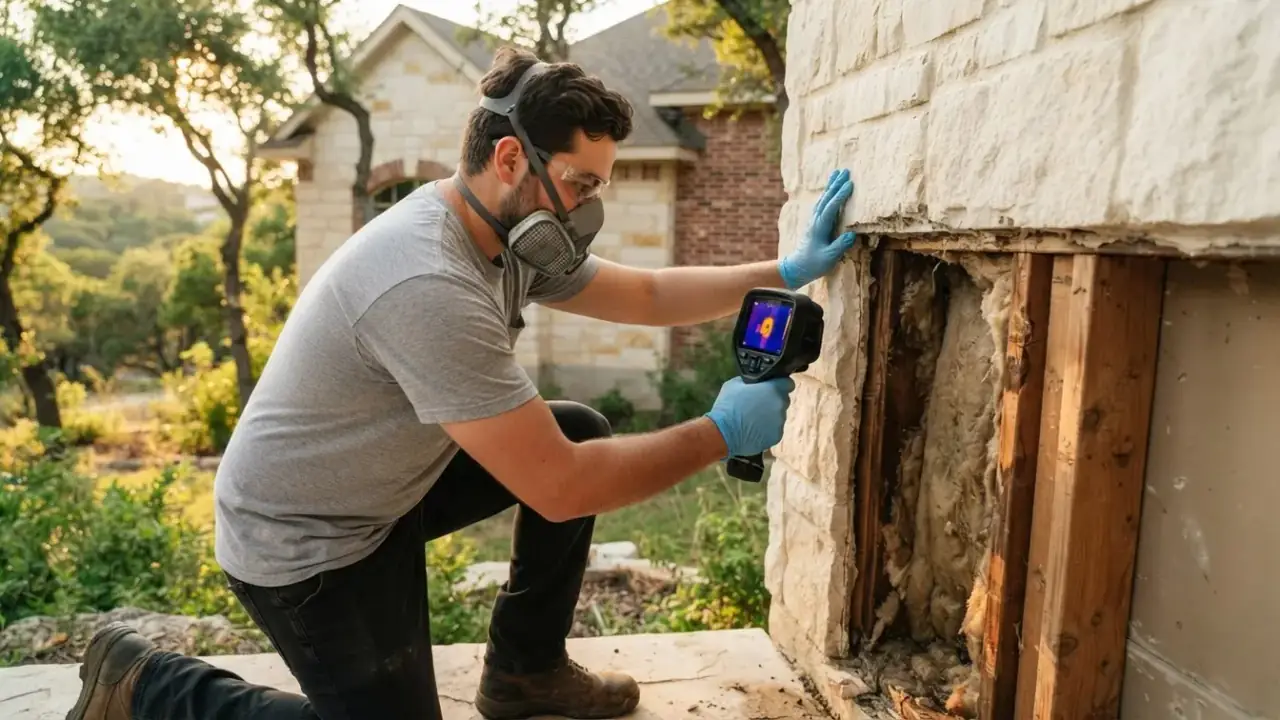
Wall cavities, under-floor spaces and insulation dry slowest. Injection drying and floor systems can reach them without removing everything.
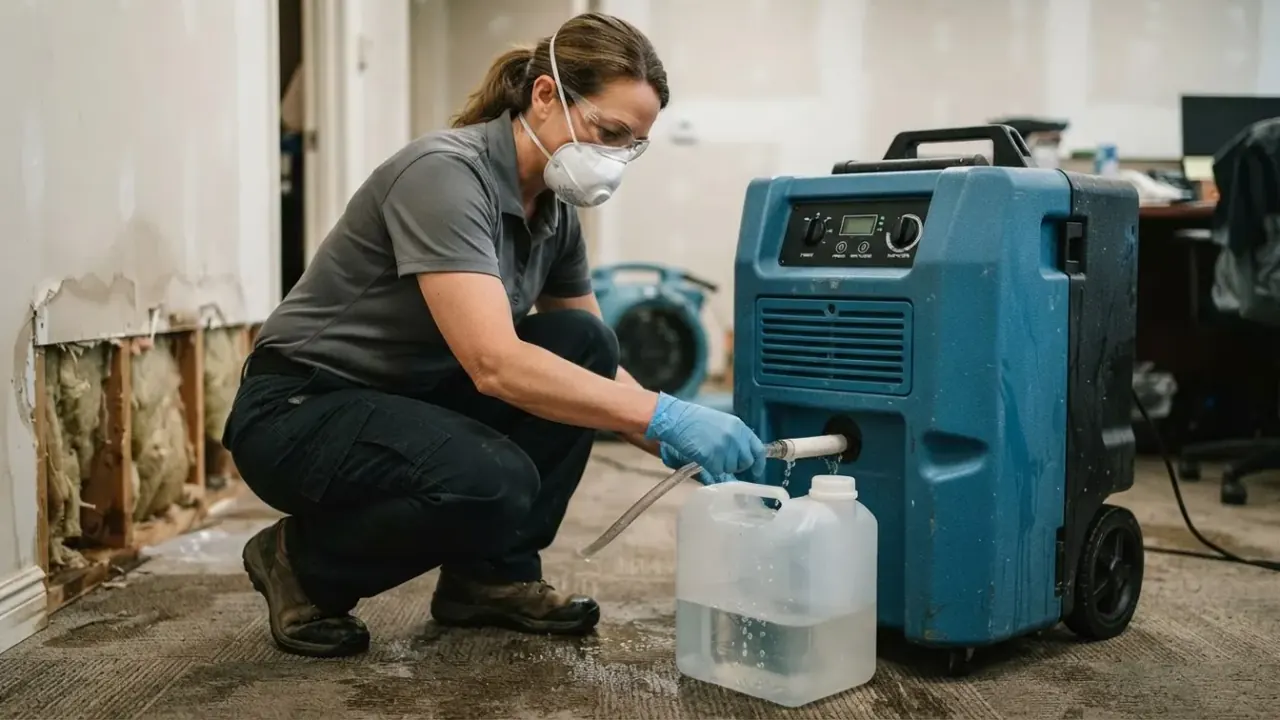
Final readings are compared with dry targets for each material. Only then is equipment removed and the space cleared for repairs.
Move across a circle, or focus it and press Enter, for an illustrative thermal view of the photograph.
Pin meters read inside wood and drywall; pinless meters scan larger areas. Together they map the damage and prove the dry-down.
Low-profile fans that push air across wet surfaces. Correct aim and spacing matter more than the number of units.
Refrigerant and desiccant units remove moisture from the air. In cold Flagstaff winters, the right type keeps working when a standard unit slows down.
Shows temperature differences that can point to damp areas. Readings are always confirmed with a meter before decisions are made.
Thermal views are illustrative, generated from the photographs.
Drying depends on temperature, humidity and airflow together. Cold air holds less moisture, so winter drying plans differ from summer ones.
Air can be directed into wall cavities through small openings. This can save drywall that would otherwise be cut out.
Each material has a dry range. The log compares today's readings with that range, visit by visit.
Flagstaff's elevation changes the drying maths. Cold winter air holds far less moisture than warm air, unheated rooms dry slowly, and a home heated intermittently — like a vacation home — can stall a dry-down. Around 90 inches of snow a year also means meltwater damage often arrives in cold months, when drying is hardest.
What you see: The wall surface feels dry and paint looks normal.
What it means: The cavity and insulation behind it can still be wet.
A pinless scan plus a pin reading at the base tells the truth before the wall is closed up.
What you see: Boards look flat again after a leak.
What it means: Moisture may still sit in the subfloor, ready to cup the boards later.
Meters read both board and subfloor; drying mats can pull moisture through the floor system.
What you see: No musty smell a few days after the leak.
What it means: Smell is a late warning. Damp pad and wall bases can be wet without odor.
Readings, not noses, clear a room for repairs or re-carpeting.
Most expensive water damage outcomes are really drying failures discovered weeks later.
Anyone can rent a fan. Drying that is mapped, monitored and verified is a different service.
Walls and floors that reach dry targets can stay. That keeps the repair list shorter and the home intact.
The readings log shows insurers and buyers exactly what was wet and when it dried. Guesswork leaves no record.
Mold needs moisture. Verified dry materials remove the condition mold grows in — see our mold guidance.
Rebuild work over verified-dry structure stays put. Our repair team works from the same readings log.
What a written drying scope covers and what shapes it. For how restoration costs are built, see our water damage cost guide.
Included
Depends on
Clear records you can keep and share.
Which materials were wet, and where, at the start.
Visit-by-visit moisture readings for each material.
What was placed, where, and for how long.
The short version of how structural drying works.
Removing moisture from building materials with controlled airflow and dehumidification.
Materials dry unevenly on their own, and cavities may never dry. Mold and warping fill the gap.
Final meter readings are compared with dry targets for each material and logged.
These are the Flagstaff ZIP codes we cover. Not listed? Call and ask — coverage follows the Flagstaff area, not a rigid map.
Based in Flagstaff at 2051 E Huntington Dr, covering neighborhoods across the city. These are areas we serve — call to confirm your street.
It depends on the materials, how wet they got, and the season — a single room with surface moisture is very different from wet wall cavities in January. We do not guess a finish date at the start; monitoring readings show the pace, and drying ends when materials reach their dry targets.
Household fans help surfaces but rarely dry wall cavities, insulation or subfloors, and they cannot tell you when materials are actually dry. The risk is closing up a room that is still wet inside. A moisture check first shows whether professional drying is needed at all.
Cold air holds less moisture, and cold materials release water slowly. Dehumidifiers also lose capacity in cold rooms. Winter drying in Flagstaff often needs the right dehumidifier type, managed room temperature, and closer monitoring than a summer job.
Other services from the same team.
A moisture check settles it. Call (928) 766-1764 and we will map what is wet and what drying would involve.
Tell us what happened and where the water is. Calling is fastest when water is standing — reach us at (928) 766-1764, or send the form and we will take it from there.